
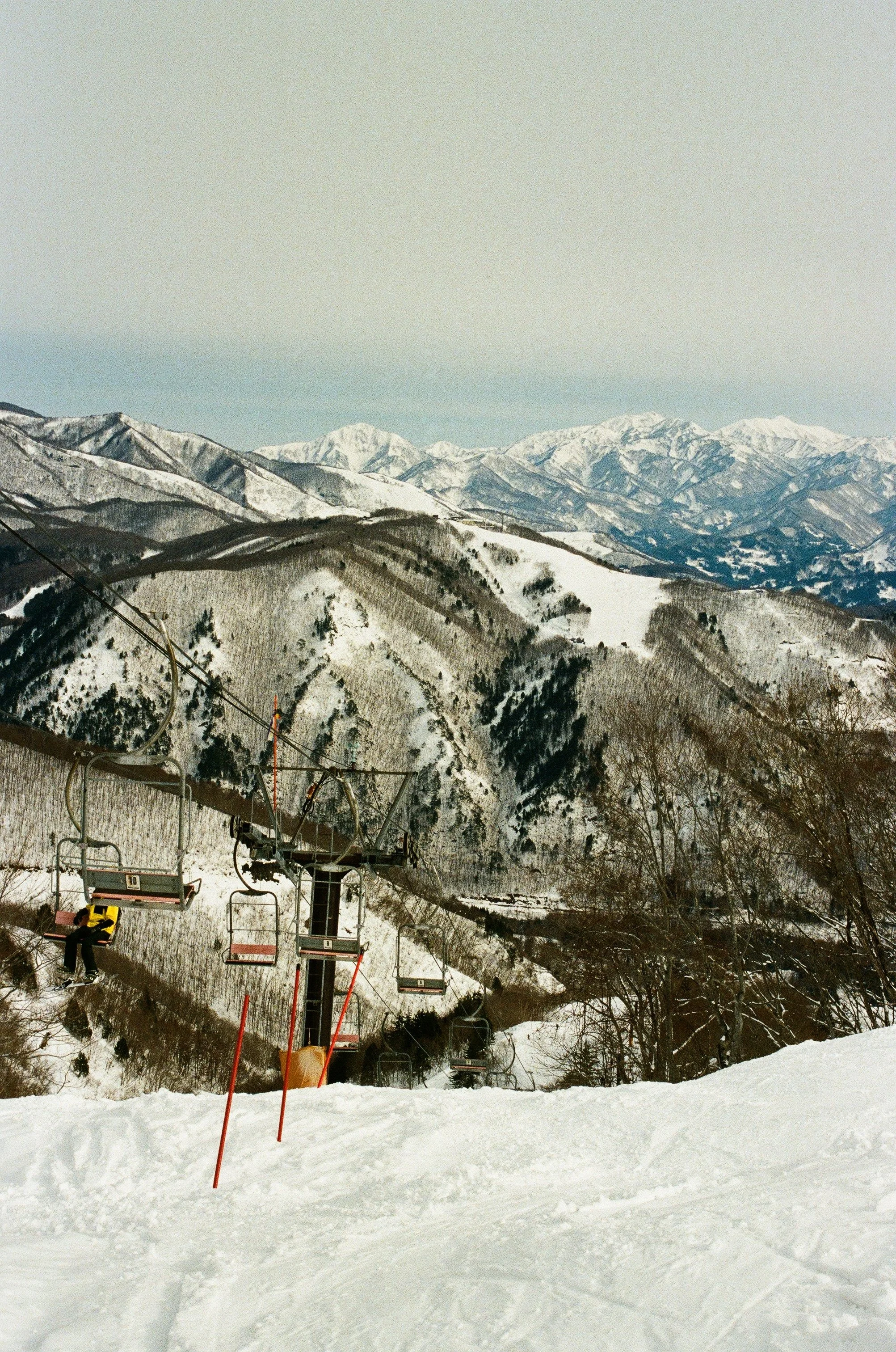
Old but reliable. One of the double chair lifts at Happo One. Shot on an Olympus OM-1 analog camera.
January 2025:
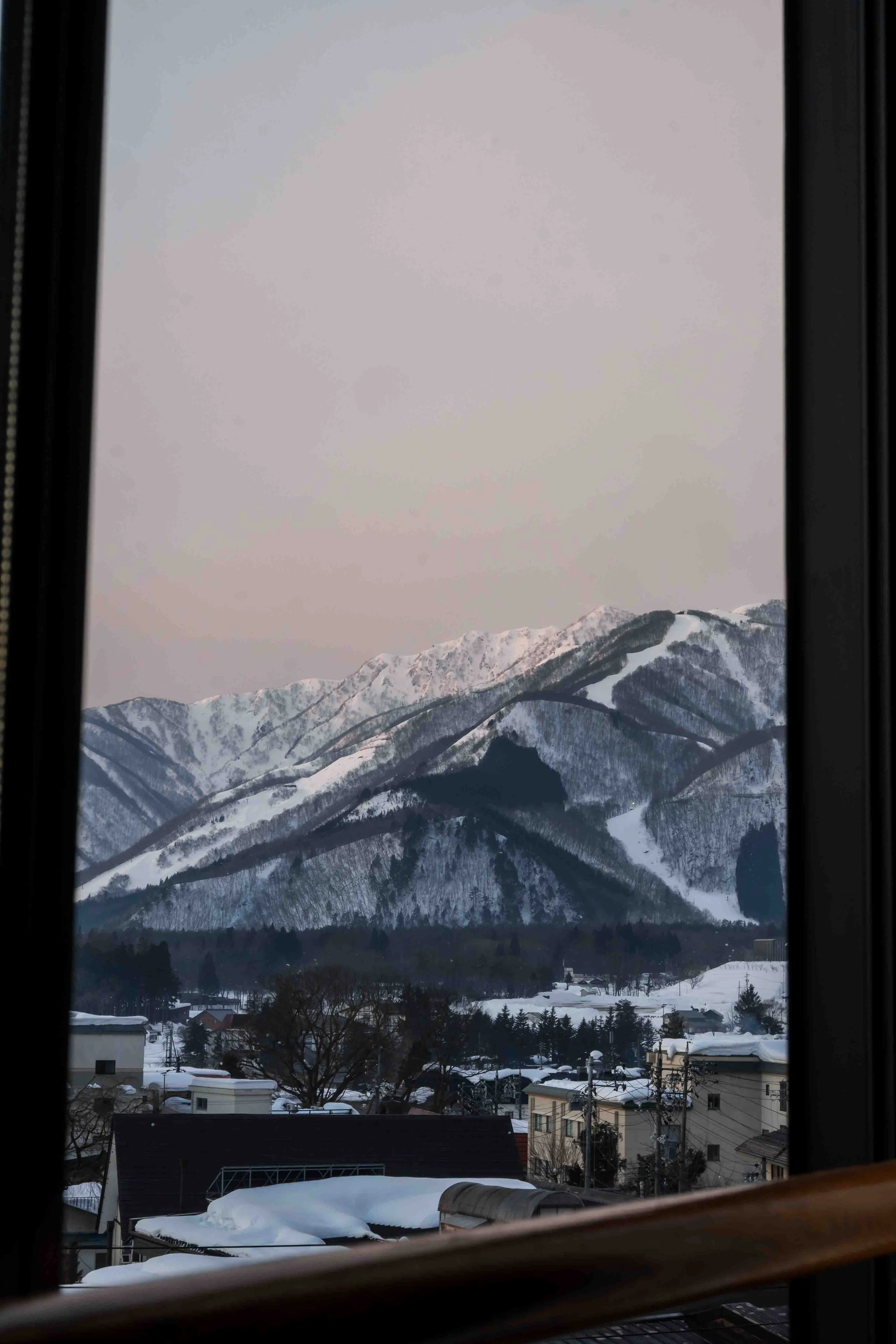
View from the Hotel window towards Hakuba 47 and Hakuba Goryu.
After months, nearly a year, working on publications and my PhD thesis, I submitted my thesis and thought of a quick holiday before work continued. I had three weeks before I would work again as a tutor in a university lecture. As it is snow season in Europe, I wanted to go snowboarding.
Snowboarding on such short notice during the high season in Europe is quite expensive. Without a car, I am limited to resorts reachable by train, which makes the choices smaller. Most things I found ended at around 2.000€ for a week, as I would book 7 days in advance. The price tag was already this high, so I daydreamed of snowboarding in the world-renowned Japan powder. After a short internet search, I found out that the most famous resort, Niseko United in Hokaido, is out of budget by a mile. Later, I also learned that due to its popularity, it was overcrowded this year.
As an alternative, I found Hakuba in Nagano prefecture, just three hours from Tokyo by Shinkansen and bus. When I looked into it in detail, the price tag for a two-week Japan snowboarding trip was 2500€. No questions were asked, and I booked straight away. I found very cheap 600€ flights with AirFrance from Germany to Tokyo and a fantastic hotel in Hakuba. The main difficulty was deciding on one of the thousands of hotels in Tokyo to stay at the days before and after the snowboarding.
Further, a 5-day lift pass for the whole of Hakuba Valley was roughly 250€, compared to similar ski resorts in Europe, which ask around 500€ for 5 days. How can you withstand these “savings”. I feel that skiing in Japan is a great option currently because of the weak yen. It is presently a bit cheaper than a comparable trip in Europe, but it is very much dependent on flight prices.
The Valley has some natural hot springs and offers a variety of public onsen baths, which were so refreshing after a long and cold day on the slopes. I never knew how tense my legs were until I stepped into the bath and felt all my muscles relax. I was especially lucky that my hotel had its own onsen bath, which I enjoyed to the fullest during my stay.
One thing everybody needs to be aware of is that people with tattoos are mostly not welcome in onsen baths and are asked to cover them up with plasters, or they are asked to book more expensive private onsen where nobody can see them.

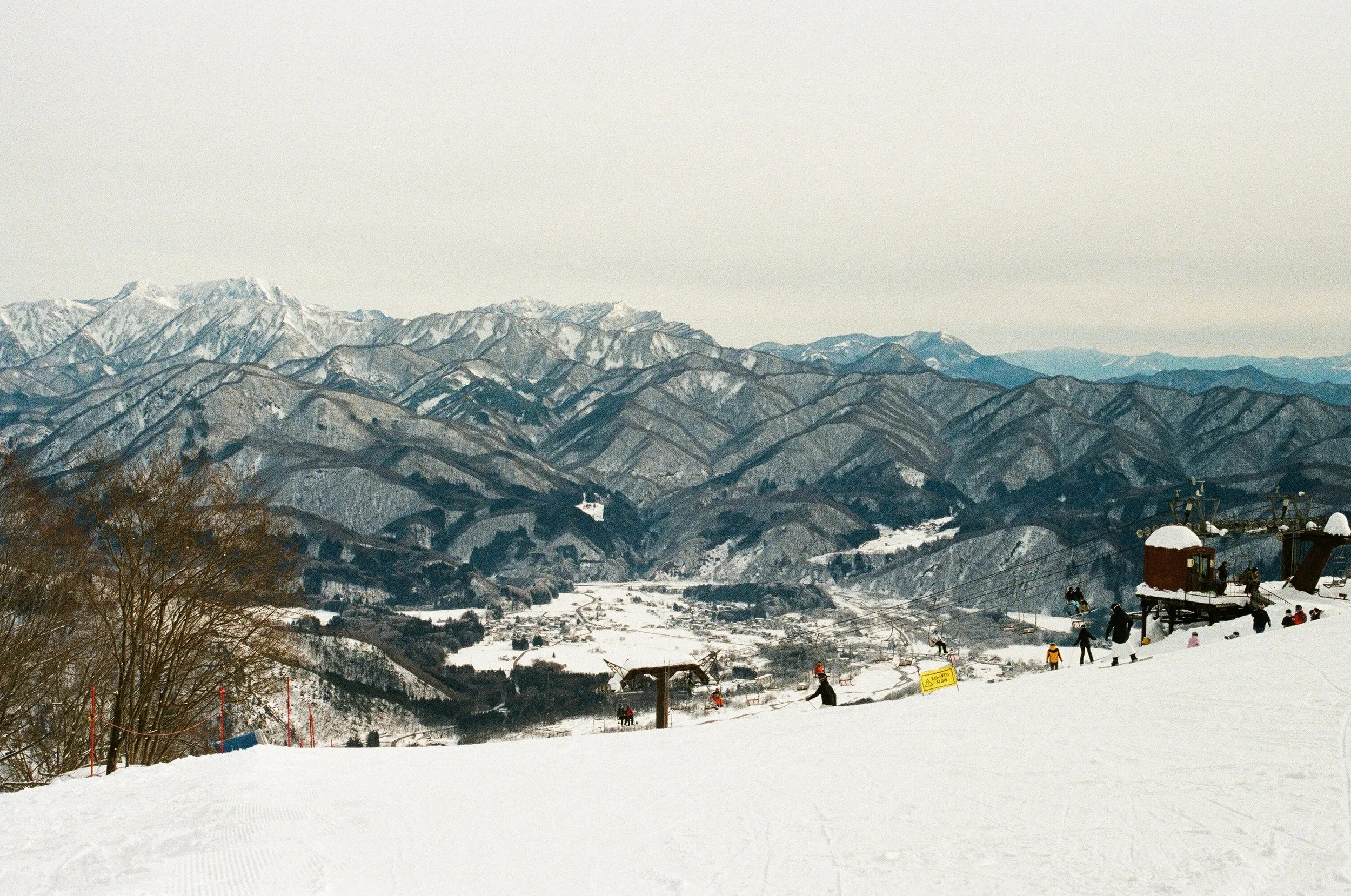
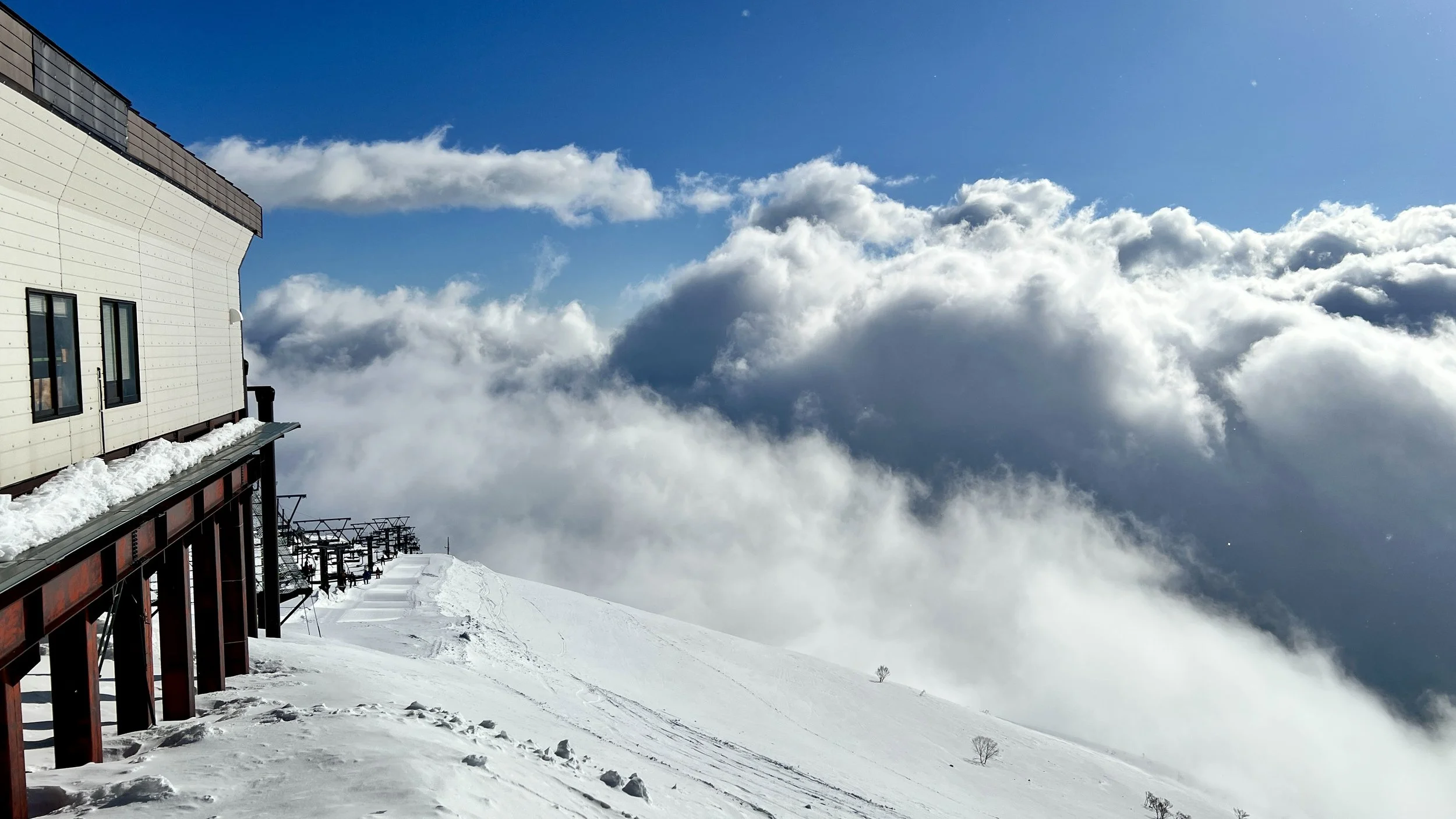
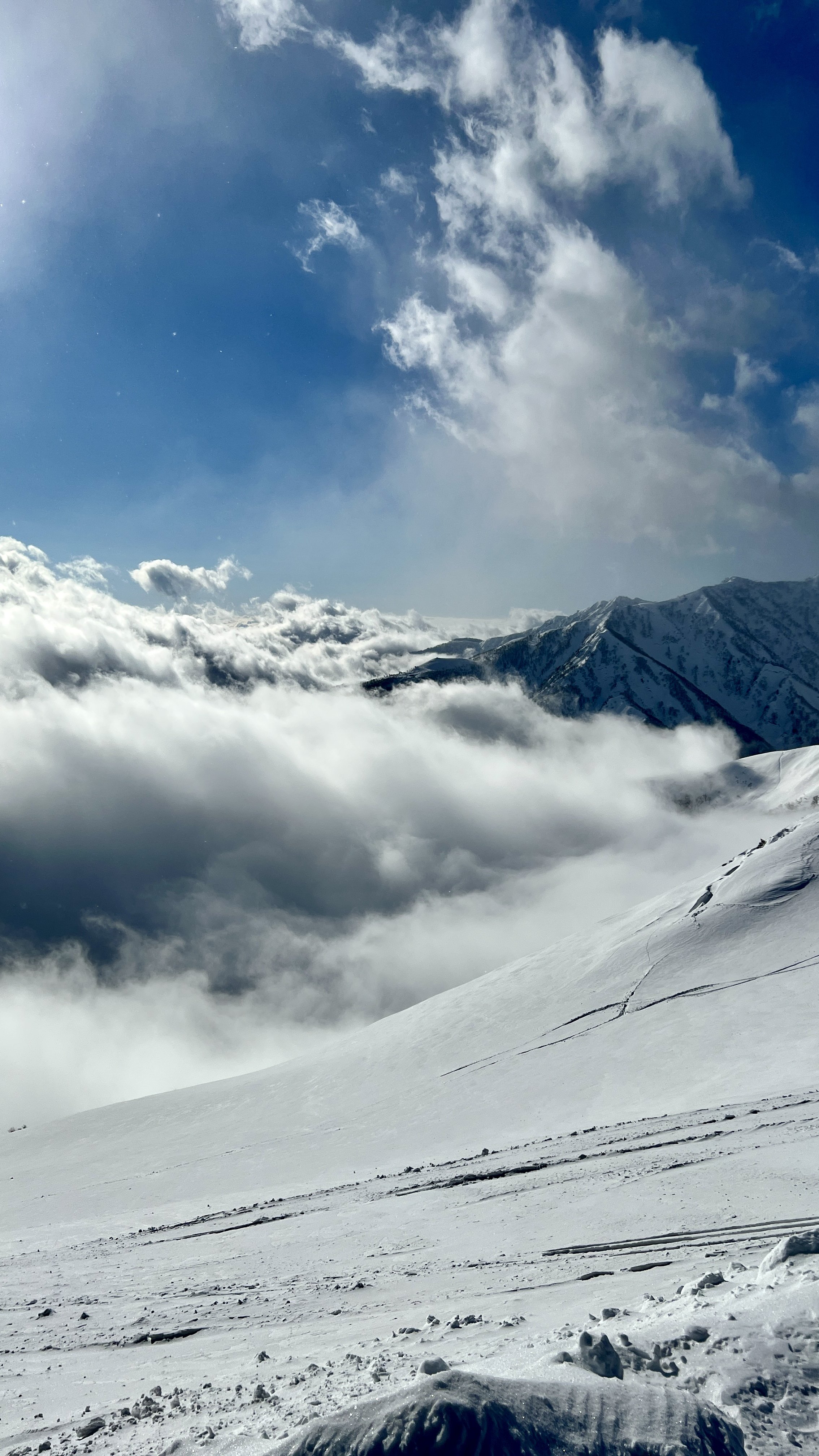
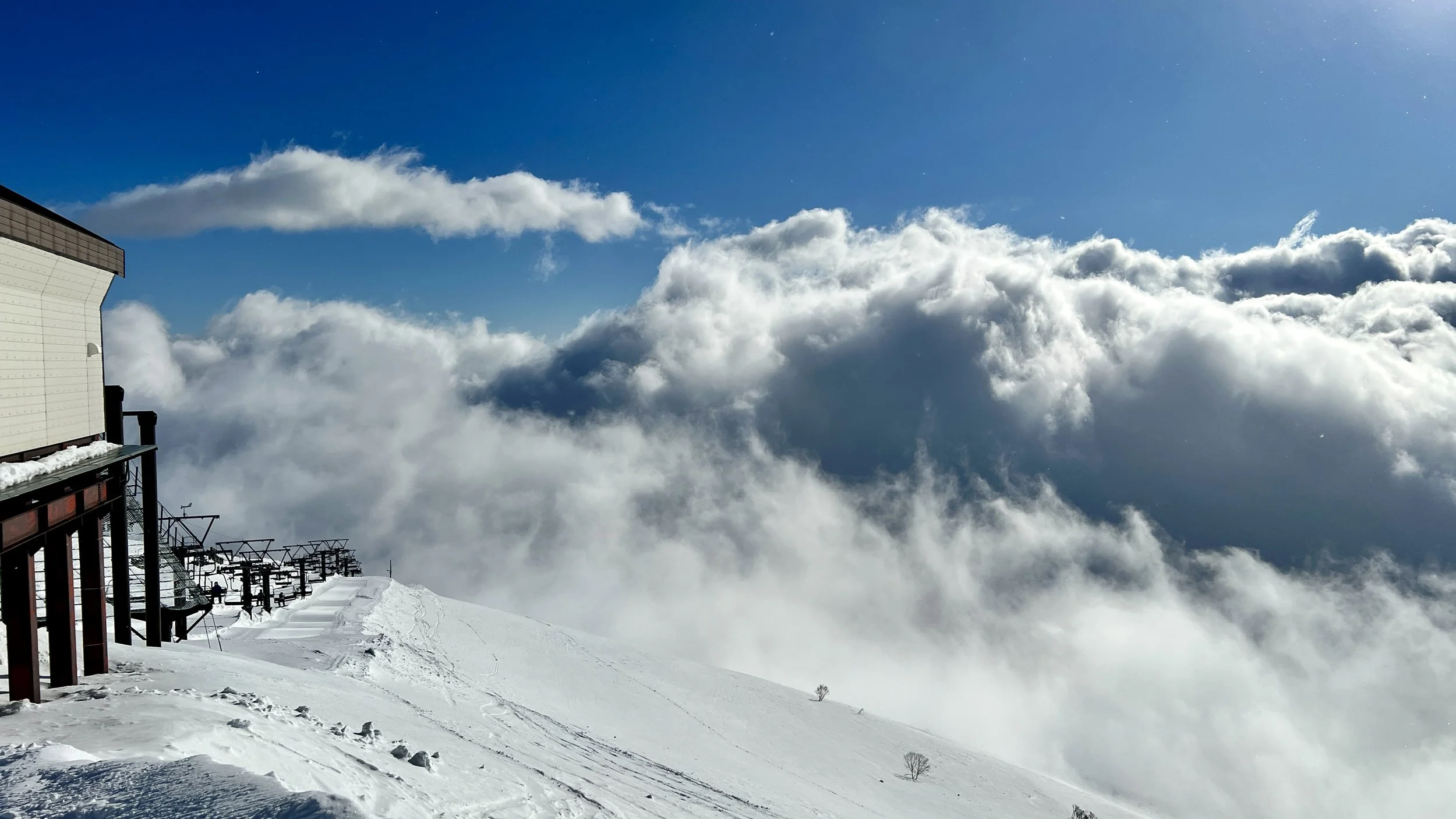
Mountain views at Happo One resort, shot on a Olympus OM-1 analog camera.
Transporting snowboard gear in Japan:
I knew beforehand that you could send luggage between the airport and hotels using different services in Japan. At the same time, I felt that there is surprisingly scare information about it on the internet. When I landed in Haneda, I just went to the Yamato transport (black cat) service desk. That was the only real information I could find. There is no option to book it in advance or anything online. Once there, it is surprisingly easy. You either scan a QR code, fill out the information on your phone, and produce a new QR code for them to scan, or you can fill out a paper form. Afterward, you hand them the bag you want to ship (in my case, a snowboard bag), pay, and leave. They will inform you how long it will take. In Tokyo, it can be delivered the same day, but you often need a spare day for the ski resorts. They told me it would not arrive before Wednesday due to heavy snowfall in Hakuba when giving it to them Monday at 8 pm. When I arrived in Hakuba mid-day on Wednesday, the hotel manager told me it had come on Tuesday already. The date Yamato gives you is often the latest it will arrive, and they try to be faster, the hotel manager explained. Therefore, I highly recommend this service as it makes traveling so much easier, especially with snow gear. You do not need to carry large snowboard or ski bags around Tokyo or any trains.

Empty slopes, but safety bars to put your skis or snowboard on during the ride like in Europe did not exist in the whole valley (besides maybe one or two very long lifts).
Snowboarding in Hakuba

Ski patrol on one of the few lifts with racks to put your skis on.
My hotel (Hakuba Hotel Ougiya) was quite centrally located in the Hakuba area near the Hakuba Bus Terminal, ideal for walking to the Happo One resort lifts in the morning. Happo One was also the main area I skied in, as it was easily reachable for me and had many runs. Home to the ski events of the Nagano 1998 Winter Olympic games, it also felt like the most up-to-date resort. Saying so, some facilites especailly the lifts felt quite old. Compared to the super-modern ones I am used to in Europe, which have snow covers and heated chairs, the ones in Hakuba with no or just a thin safety bar and a single neoprene-covered board as a seat felt very out of date. One of the chair lifts had German safety writing on the seats, which made me wonder if they somehow bought an old one from Germany or Austria and installed it in Hakuba. In this regard, they were all in perfect condition and did not feel unsafe in the slightest.
For most of the trip, I had very empty slopes with no lift lines and perfect snow conditions. It only got slightly more crowded on the weekend and during Chinese New Year.
I never experienced softer “hard packed” snow. The runs on empty slopes in the morning were incredible. The lifts start running at around 8 am, but even around 9-10 am, the slopes were often virtually empty and still groomed to perfection. In the afternoon, when European slopes frequently get slushy or hard moguls build up, the slopes in Hakuba stayed very nice with soft, powdery, loose snow. Some moguls were building up, but as they are made from soft snow, you could just go through them and spread them out without much force. I only experienced slushy snow on the last 50-100 m of one south-facing valley run.
At the same time, there is a different mentality to groomed slopes in Japan, at least in the Hakuba valley, compared to Europe. Black (double black diamond) and steeper red slopes are often not groomed, leading to mogul runs after some days of no fresh snowfall. I was more than once surprised by moguls as the piste suddenly got steeper and changed from perfectly groomed to moguls, only to be perfectly groomed 100 m down the slope, where it got flatter again. I do not know if they decided not to groom these slopes or if they maybe lack the equipment like rope winches for their snow groomers.
Nevertheless, even with sometimes low temperatures in the positive degrees, the snow stayed super powdery, compared to Europe, where you often have very icy slopes in the morning when the temperatures are above freezing during the day.
Sadly, we only had some light snow showers in my time, bringing up to 5 cm of fresh snow. Two days after I left, a snowstorm rolled in, dumping nearly 3.5 m of fresh powder in two weeks. I really wanted to experience this, and it gave me a reason to return next year and hope for some fresh powder.
I feel Happo One was the resort with the most balanced variety of slopes (green/blue, red, black) and off-piste terrain you can ride.

The safety net saw better days, but it is a style somehow.

Wide red valley run in Hakuba Cortina, with the iconic Hotel complex at the bottom with the red roof.
Other resorts I tried during my time were the interconnected Hakuba 47 / Hakuba Goryu resort and the Hakuba Cortina and Hakuba Norikura Onsen resorts, which are also connected via an ungroomed double black diamond run. In general, free shuttles travel between all the resorts in the valley, with Happo One more or less located in the center. For me, due to snow obstruction on the road, the travel time by bus from Happo One towards Cortina was already 45 - 60 minutes, while towards Hakuba 47, it was around 15 minutes. This led me to stay at Happo One most days.
Overall, Hakuba Cortina is well known for its off-piste options. The resort is mainly a large valley bowl, with a long and extensive red run in the middle and a blue/green (depending on whether you are European or American) run on the ridge once around the bowl’s ridge. Everything in between is free terrain with a red to double black classification. There are three ungroomed (when I visited) runs from the ridge into the valley, and the rest is sparse to very dense forest. Ideal for tree skiing. I did the valley run multiple times as it’s wide, sunny (in the afternoon), with a couple of jumps on the side, which was a lot of fun for a couple of runs. As I had no fresh powder and warmer temperatures, I did not try any off-piste options to avoid triggering an avalanche or getting stuck alone in the trees. Admittedly, the slopes are classified as double black diamonds (expert level) in some areas, but I would put them more towards the red slope area. The hardest part was often the Mogul part, not the steepness.
The connected Norikura Onsen resort is family-focused, I would say. It has very long flat runs (mostly green/blue), which are very wide, and is ideal for beginners and families with children. I had some fun for about three runs but got bored quite fast. As a family and with fresh powder, I think the area is ideal to stay at as you can easily cross between Cortina and Norikura as an expert rider, and beginners or younger members can remain in Norikura. The day I visited (Thursday), I had multiple runs for myself, and together with the very wide runs, I do not think it will ever get very crowded here.
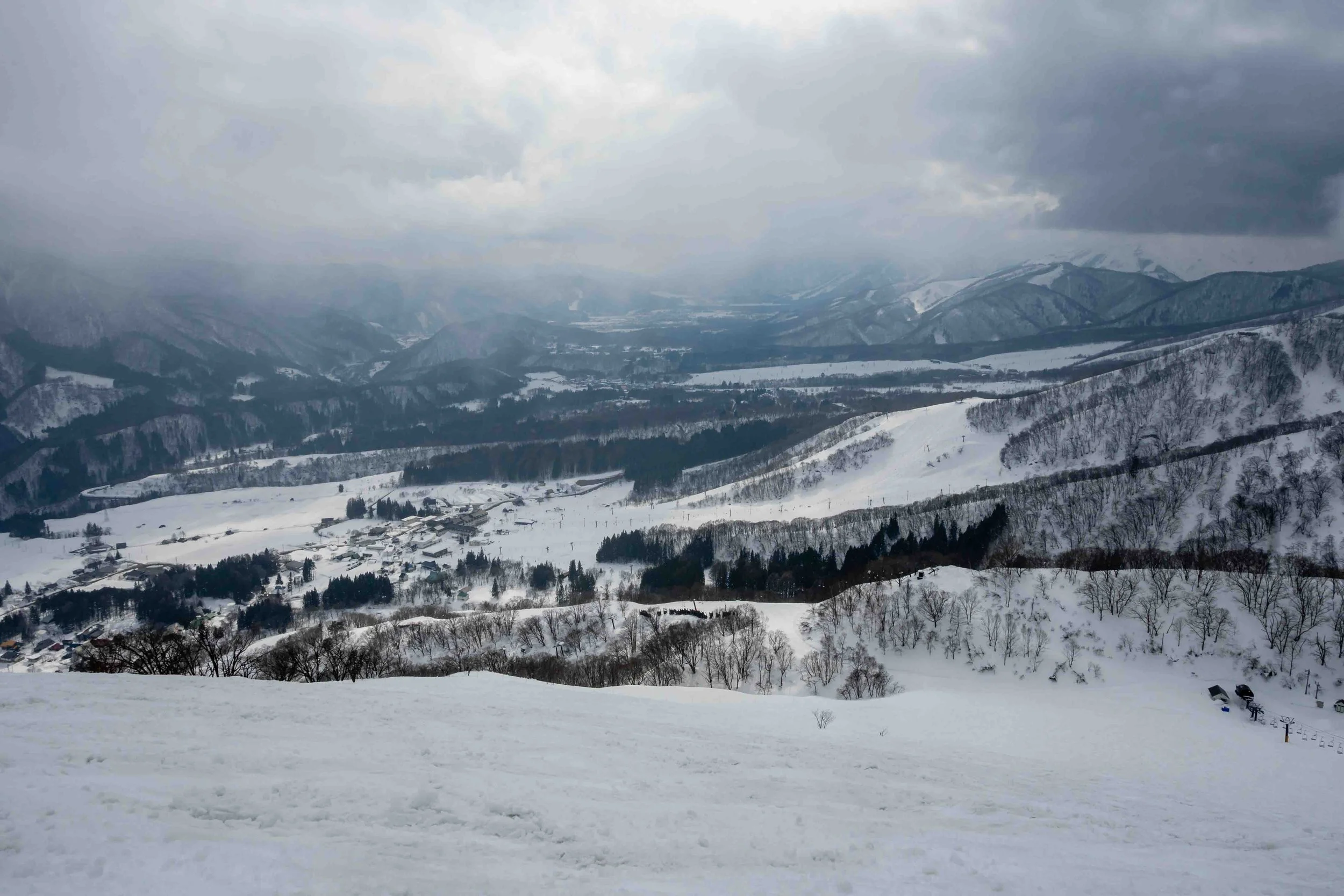
Connecting ungroomed black mogul run between Cortina and Norikura Onsen. View towards the valley base of Norikura Onsen.

Snowfall and very low hanging clouds in Hakuba Goryu.
The combined Hakuba 47 and Hakuba Goryu resort felt a lot like Happo One, with a bit less open terrain to ride. The most surprising thing was the base station at Hakuba Goryu, which had a Burton flagship store where you could rent the current season boards, boots, binding, and cloths for relatively cheap. I wanted to try the Burton step-on binding with boots, but sadly, my size was not available when I visited the shop.
The day I rode at this resort, the weather was tremendous. It was cold, with very low-hanging clouds and some snowfall. In combination, visibility lay below 15 m, it felt, and some lifts were closed due to strong winds.
All open runs had great snow, and the light dusting of fresh snow after each run made it a lot of fun to ride, even with horrible visibility. As not many people were out in these conditions, it felt like a resort for myself a lot of the time.
I talked to some people in the gondola, and we felt like the most international group in the resort. We were: Australian, Swedich, Dutch, Czech, and German (a bit cheated as the Czech person lives in Australia). A bit crazy; one of the girls rode with a broken foot, but said if you close your snowboard boots tight enough, they stabilize the broken part and act like a cast. That is probably true, but it is still nothing I would try or do.
Overall, skiing/snowboarding is a great place to meet people. You always have new people in the lifts you go up with. Most of them are very friendly and talkative. You are both on holiday and doing what you like, so I think the barrier to talking to each other is quite low.
One thing I found out is that nearly 70 % of people riding in Japan are Australian. The best answer somebody gave me to why so many Australians are skiing in Japan was that Japan is the closest place to go skiing in the Australian summer. Following this logic, Patagonia and Australia are the closest places to go skiing in the European summer, and I had never thought about that. At the same time, I can not blame them. I flew halfway around the world to snowboard in Japan when there were perfectly good European resorts I could have gone to.
Due to the high percentage of Australian tourists in the area, many things cater to the Australian taste. For example, Australian radio on the chair lifts or apres-ski blasting the Australian top 100 hits one of my day there starting at 10 am.






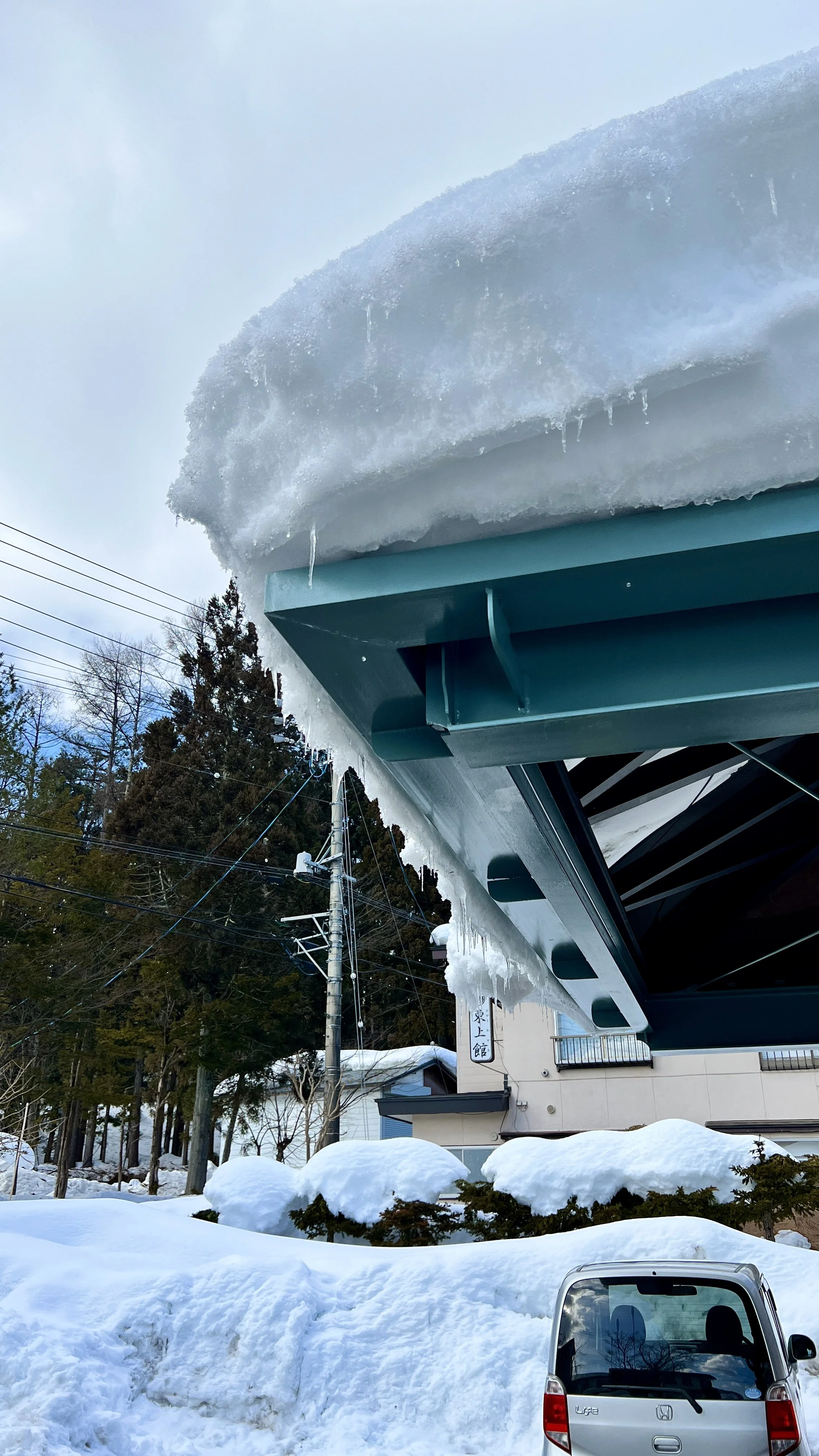
Snow caps on the roof in the valley.
Staying in Hakuba Valley
The valley offers many different options for where to stay and what to do after or instead of a day on the slopes.
The most popular region to stay in the Hakuba Valley is Echoland, which has many holiday rentals, small hotels, and some of the best restaurants and bars in the valley. No resort is adjacent to Echoland, but it is located between Happo One and Hakuba 47. A free shuttle travels between the resorts and Echoland, but I felt that many people who stay in this area travel by rental car through the valley.
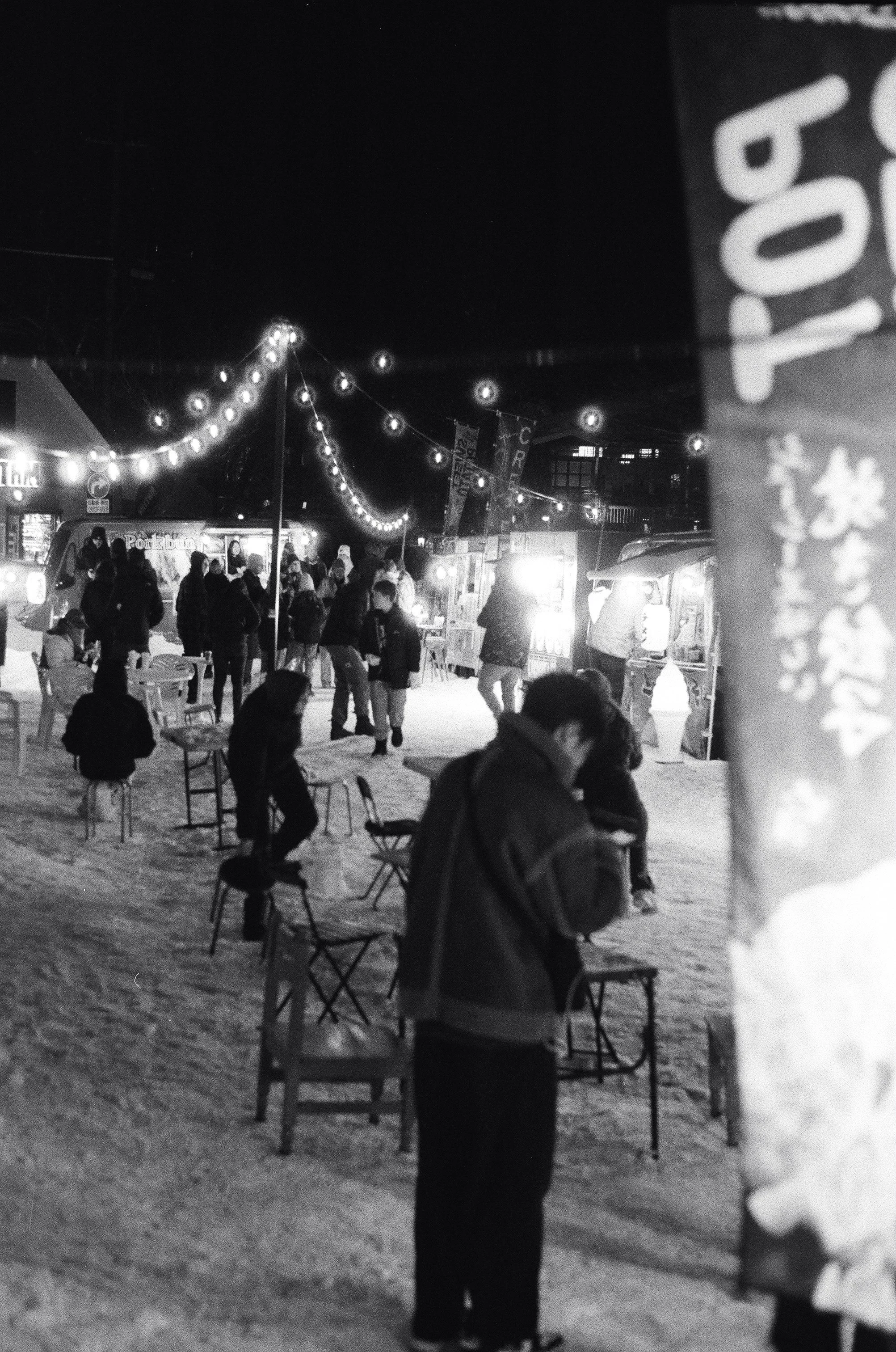
As mentioned, I stayed in the Hakuba area, directly below the Happo One resort and close to the main bus terminal. A lot of more traditional hotels, as well as some very luxurious holiday rentals, are located here. A small town square with food trucks, restaurants, and equipment rental places in the middle made for a nice, cozy-feeling place. A slight problem for me was that it was a bit hard at night to find a spot in the restaurants as a single traveler. I recommend reserving a table beforehand either by calling them or via Tabelog (the best place to search and reserve restaurants in Japan). I was once sent away as a single person, as it seems they did not want to waste a whole table on just one customer. Saying so, there was always a restaurant where I could get a spot, or I just went for takeout at one of the food trucks in the middle of the town square. The food trucks offered a great variety of Japanese food, from Gyosas over rice bowls and Yakitori to Wagyu steak sets.
For everybody looking for apres-ski, I can recommend the Hakuba Apres at the base of Happo One and Blizzard, also at the base of Happo One, near the gondola. The first, Hakuba Apres, is a primarily outdoor venue with live DJs, often from 2 pm, with various drinks and some open fires to warm yourself on. Blizzard is a restaurant mainly known for its great Pizza. It frequently has DJ sets and live music from 4 to 6 or 8 pm. There are many more spots for apre-ski and nights out around the valley. A great place to get yourself informed is the Hakuba website or their Instagram page where they post daily updates on events and apres ski locations.
At the base of all the other resorts are friendly, cozy hotels and holiday rentals. It mainly comes down to personal preference. Do you want to travel a bit further to your favorite resort, or are you planning to ski them all and are therefore staying centrally to access them all relatively fast?
Around the valley are shared accommodation places like hostels, which are rare in Europe. They have rates of 100-200€ per week. I thought about staying in one, but with Japanese beds often being on the smaller side and myself being 1.95 m, I went for a hotel with a double bed for myself.
A slightly special place is Hakuba Cortina; there is no base area aside from the large hotel. Somebody told me that the resort was built for the hotel. I have no idea if that’s true, but I must admit it would make sense from the location of the resort and hotel.
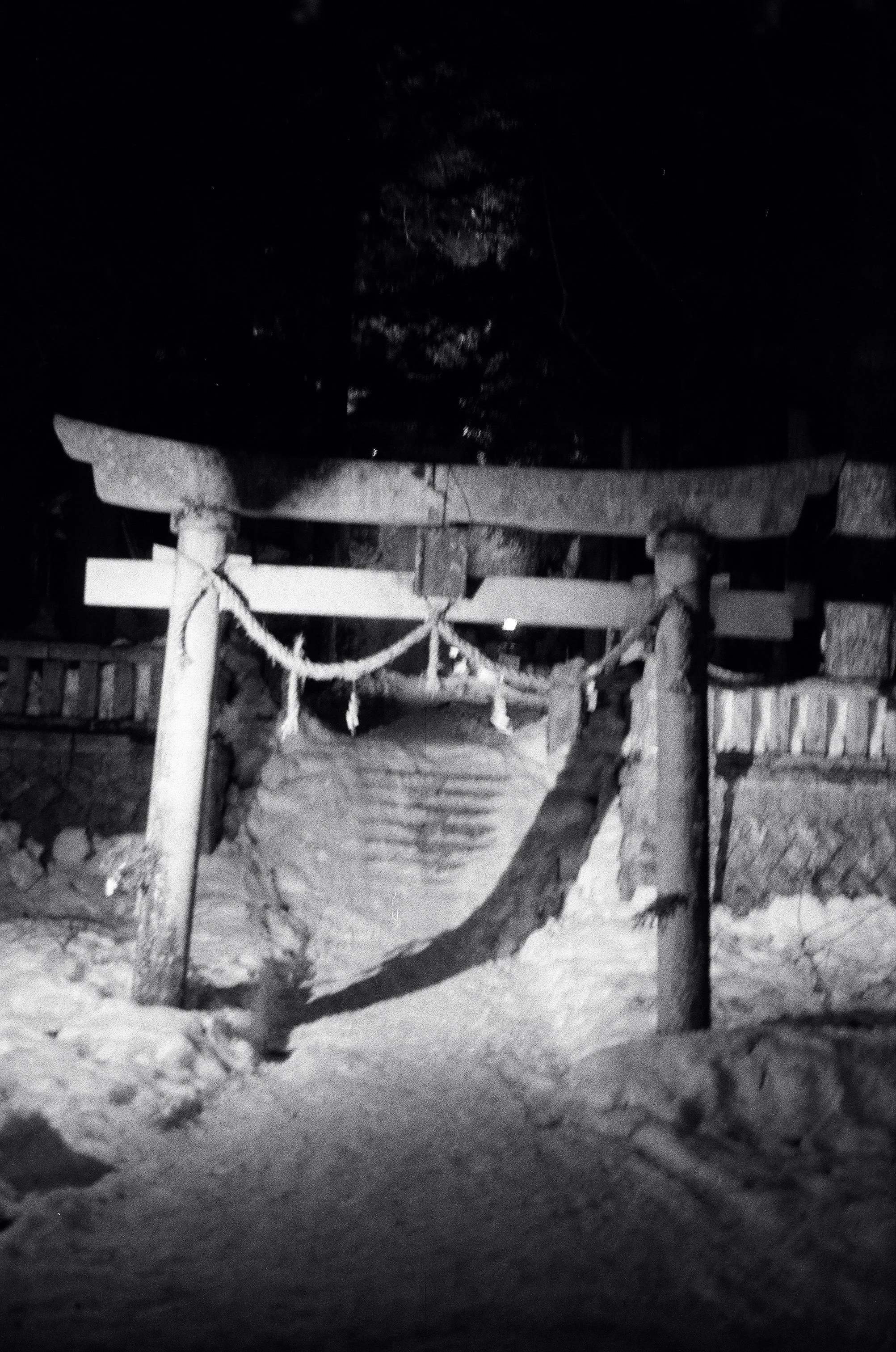
Besides skiing, Hakuba Valley offers many other activities, such as visiting small temples around the valley, taking a sake brewery tour, going on a snowmobile tour, or just going snowshoe hiking in the backcountry. I recommend a day trip to Nagano and Snow Monkey Park to see some very impressive temples and adorable monkeys bathing in an outdoor onsen.





I loved every moment of my time in Hakuba and will try to be back for another snowboarding trip next year! The people are awesome, friendly, and welcoming. Compared to European ski resort food, Japanese lunch food felt very healthy, with ramen and rice bowls instead of fries, schnitzel, and cheese noodles. A big benefit is the access to natural onsen springs around Hakuba. It is so refreshing to get into the hot mineral water of these springs after a long day on the slopes.